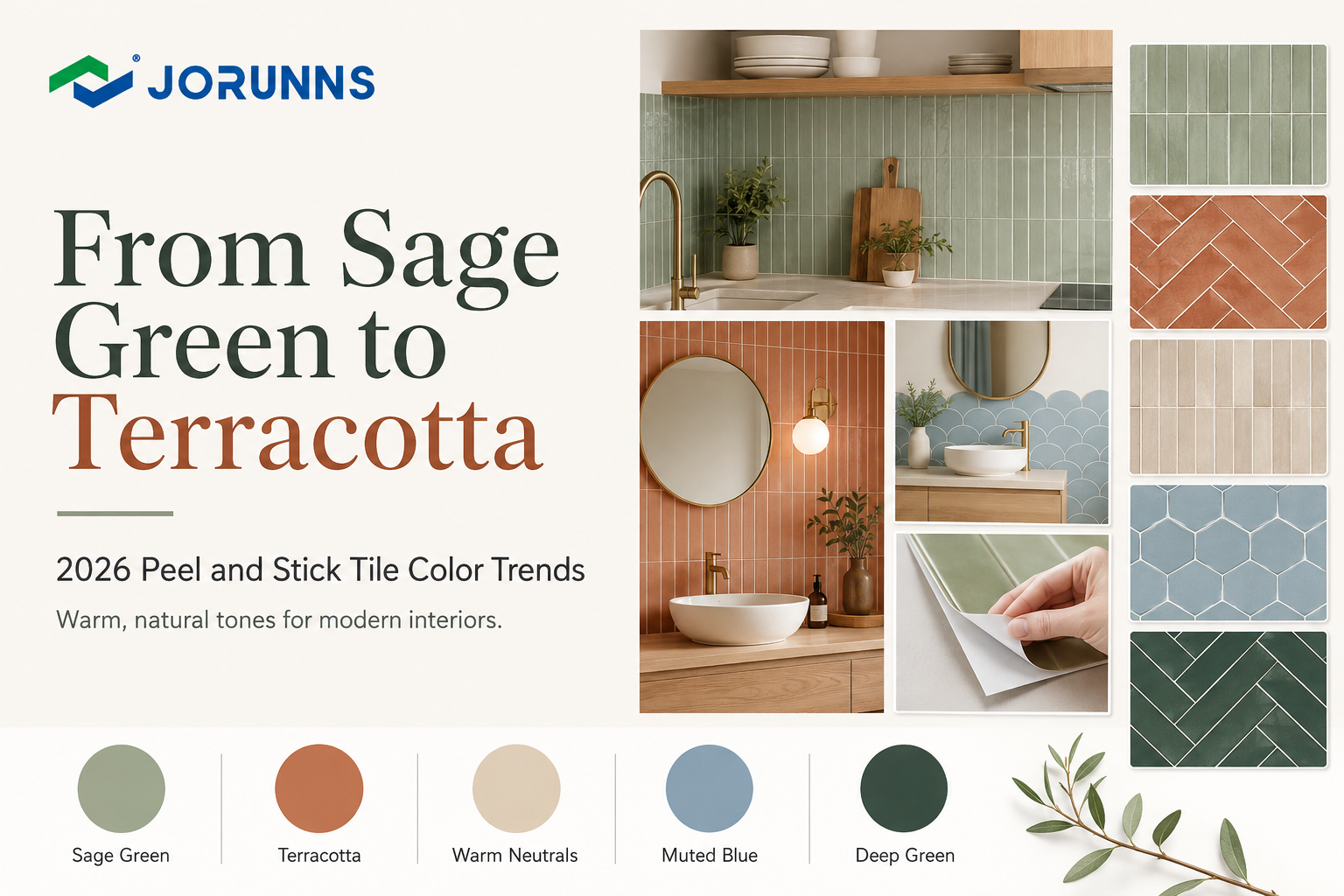
Peel and stick wall tiles and peel and stick floor tiles are both designed for easy DIY renovation. However, they are made for different surfaces and performance requirements.
Wall tiles focus on decorative appearance, easy cleaning, and backsplash installation. Floor tiles need additional wear resistance, adhesive stability, and anti-slip performance. Understanding these differences helps retailers, distributors, and private label buyers select the right products.
1. Material and Structure
A typical peel and stick wall tile may include a protective surface layer, PU layer, printing layer, aluminum foil layer, adhesive layer, and backing paper. This structure helps create a decorative surface, including embossed, glossy, crystal, or 3D effects.
Peel and stick floor tiles use a different structure. Jorunns floor tile products typically include a wear-resistant PP layer, printing layer, base material layer, removable adhesive layer, and backing paper. The wear-resistant surface is designed for daily foot traffic.
2. Performance Priorities
Peel and stick wall tiles are designed to be easy to install, easy to cut, and easy to clean. Some product series also offer 3D effects and high-temperature resistance, making them suitable for kitchen backsplash applications.
Floor tiles require different performance. Important features include:
* Wear resistance
* Waterproof surface performance
* Anti-slip performance
* Easy cutting and installation
* Removable adhesive with minimal residue
Some Jorunns floor tile series are marked with an R10 anti-slip rating. Buyers should confirm the relevant test report and product specification for each series before ordering.
3. Recommended Applications
Peel and stick wall tiles are mainly used for:
* Kitchen backsplashes
* Bathroom walls
* Laundry room walls
* Rental-friendly wall renovation
* DIY wall decoration
Peel and stick floor tiles are mainly used for:
* Kitchen floor upgrades
* Bathroom dry-area floors
* Rental-friendly flooring
* Laundry rooms and entryways
* DIY floor renovation
Jorunns positions wall tiles for backsplash, bathroom wall, retail, and private label programs, while floor tiles are intended for quick flooring upgrades and distributor or wholesaler supply programs.
4. Can Wall and Floor Tiles Be Used Interchangeably?
Generally, no. Wall tiles are not designed to withstand regular foot traffic or provide the same wear and anti-slip performance as floor tiles.
Similarly, floor tiles may not provide the same raised texture, backsplash appearance, or wall-decoration effect as peel and stick wall tiles. Buyers should select products according to the installation surface and intended application.
Jorunns Wall and Floor Tile Solutions
Jorunns supplies peel and stick wall tiles and self adhesive floor tiles for retail, wholesale, e-commerce, and private label projects. Customization options include patterns, colors, sizes, materials, packaging, labels, and instruction manuals.
Choosing the correct tile category helps improve installation results, product performance, and end-customer satisfaction.