Why Structure Matters More Than Appearance
Two LVT tiles can look almost identical on the surface yet perform very differently over time.
For retail buyers and project managers, understanding LVT flooring structure is far more important than focusing only on color or texture.
Performance issues—such as surface wear, joint movement, or dimensional instability—often trace back to structural differences.
The Wear Layer: Surface Durability Starts Here
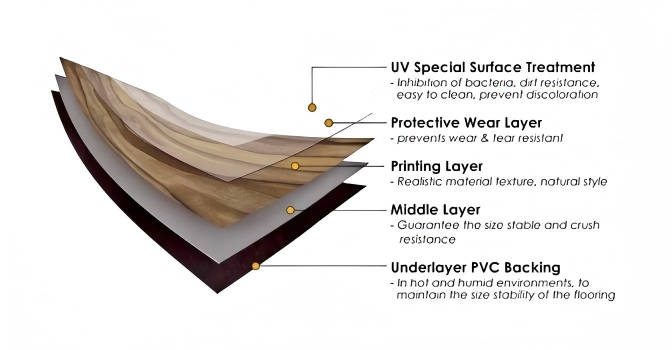
The wear layer is the transparent protective coating on top of the tile. Its thickness directly influences scratch resistance and long-term durability.
A thicker wear layer typically provides:
- Better resistance to foot traffic
- Improved stain protection
- Longer service life in commercial spaces
For light residential use, moderate thickness may be sufficient. For retail or office environments, wear layer selection becomes critical.
The Core Layer: Stability Under Pressure
Beneath the design layer lies the core structure. This layer determines how the tile reacts to:
- Temperature changes
- Humidity variations
- Continuous foot traffic
A stable core reduces expansion, contraction, and edge movement. Inconsistent core density or poor material balance can lead to visible gaps or lifting over time.
For bulk buyers, core stability is one of the most overlooked performance indicators.
Layer Bonding: The Hidden Performance Factor
LVT is a multi-layer product. How those layers are bonded matters just as much as the materials themselves.
Strong, consistent lamination ensures:
- Long-term structural integrity
- Reduced risk of delamination
- Stable performance across production batches
Even small variations in bonding pressure or process control can affect long-term reliability.

Installation Format Also Influences Performance
Structure also interacts with installation type.
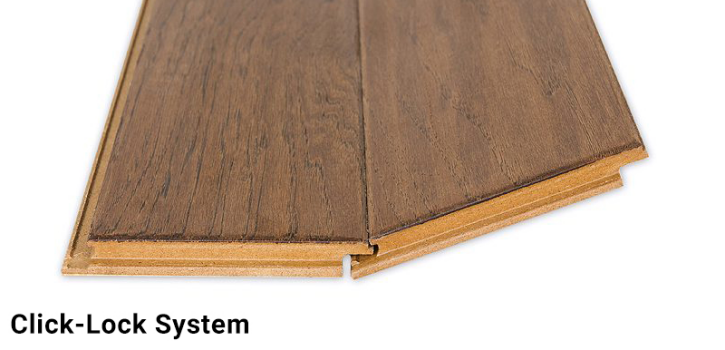
Glue-down LVT often provides enhanced stability in high-traffic areas. Click-lock systems offer flexibility and faster installation but require precise structural design to maintain joint strength.
Retail buyers should match structural design with intended installation method.
Final Takeaway for Buyers
Understanding how LVT structure affects performance allows buyers to make informed sourcing decisions.
Wear layer thickness, core stability, and bonding consistency are not just technical details—they directly determine durability, reliability, and long-term customer satisfaction.
Choosing the right structural specification helps reduce complaints and protect brand reputation.
🔗 Internal link suggestion: LVT Flooring Category / Contact Us